









INCA weapons silencer | Technical manual and operating instructions
FBT INCA Suppressor-systems (HOT, AIR, ONE, TAC)
German
Table of contents
1. introduction to the technology of additively manufactured signature reducers
1.1 Objective and scope of application
1.2 Evolution of the INCA series: from concept to series production
2. normative references and safety regulations (EU conformity)
2.1 Legal classification and acquisition requirements
2.2 Health protection and noise emissions
2.3 Basic safety rules for handling
3. detailed product description of the INCA series
3.1 INCA HOT Series: The high-performance reference
3.2 INCA AIR Series: Ultralight and flicker-free
3.3 INCA ONE Series: The integral solution
3.4 INCA TAC Series: Tactical efficiency
4. mounting and adapter systems
4.1 The M22x1 basic thread
4.2 Thread adapter installation
4.3 Mounting on the gun (over-barrel vs. on-barrel)
4.4 Quick-change systems (ERA LOC & TAC QD)
5. physical principles of action and ballistics
5.1 Gas dynamics and damping
5.2 Influence on precision (running oscillation)
5.3 Recoil reduction
6. maintenance and care: the monolithic concept
6.1 “Maintenance-free” - myth and reality
6.2 Permitted cleaning methods
6.3 Prohibited measures (hazard warnings)
6.4 Storage and corrosion protection (chimney effect)
8. fault diagnosis and problem solving (troubleshooting)
10. summary and outlook

1. introduction to the technology of additively manufactured signature reducers
The development of silencers for small arms has undergone significant technological change in recent decades. While production was long dominated by machining processes such as turning and milling, the use of additive manufacturing - specifically selective laser melting (SLM) of titanium powders - marks a paradigm shift in the design of ballistic suppression systems.
FBT Fine Ballistic Tools GmbH has positioned itself at the forefront of this technological evolution with the INCA product line. This document serves as exhaustive technical documentation and operating instructions for the silencers of the INCA family, including the HOT, AIR, ONE and TAC series.
It is aimed at professional users, gunsmiths and technically experienced sport shooters and hunters who require a thorough understanding of the functionality, handling and maintenance of these highly complex monolithic systems. In contrast to conventional suppressors, which often consist of an outer tube and a removable interior (baffle stack), INCA systems are characterised by a monolithic, i.e. “one-piece” printed design.
1.1 Objective and scope of application
The primary objective of this report is to provide standardised and safety-oriented guidance for the operation of 3D printed titanium silencers. While traditional instructions often describe step-by-step disassembly processes, this document focuses on the preventive maintenance of the interfaces (threads) and the ballistic implications of the system. The procedures described here apply specifically to the material combinations titanium grade 5/23 and carbon composites as used in the INCA series.
1.2 Evolution of the INCA series: from concept to series production
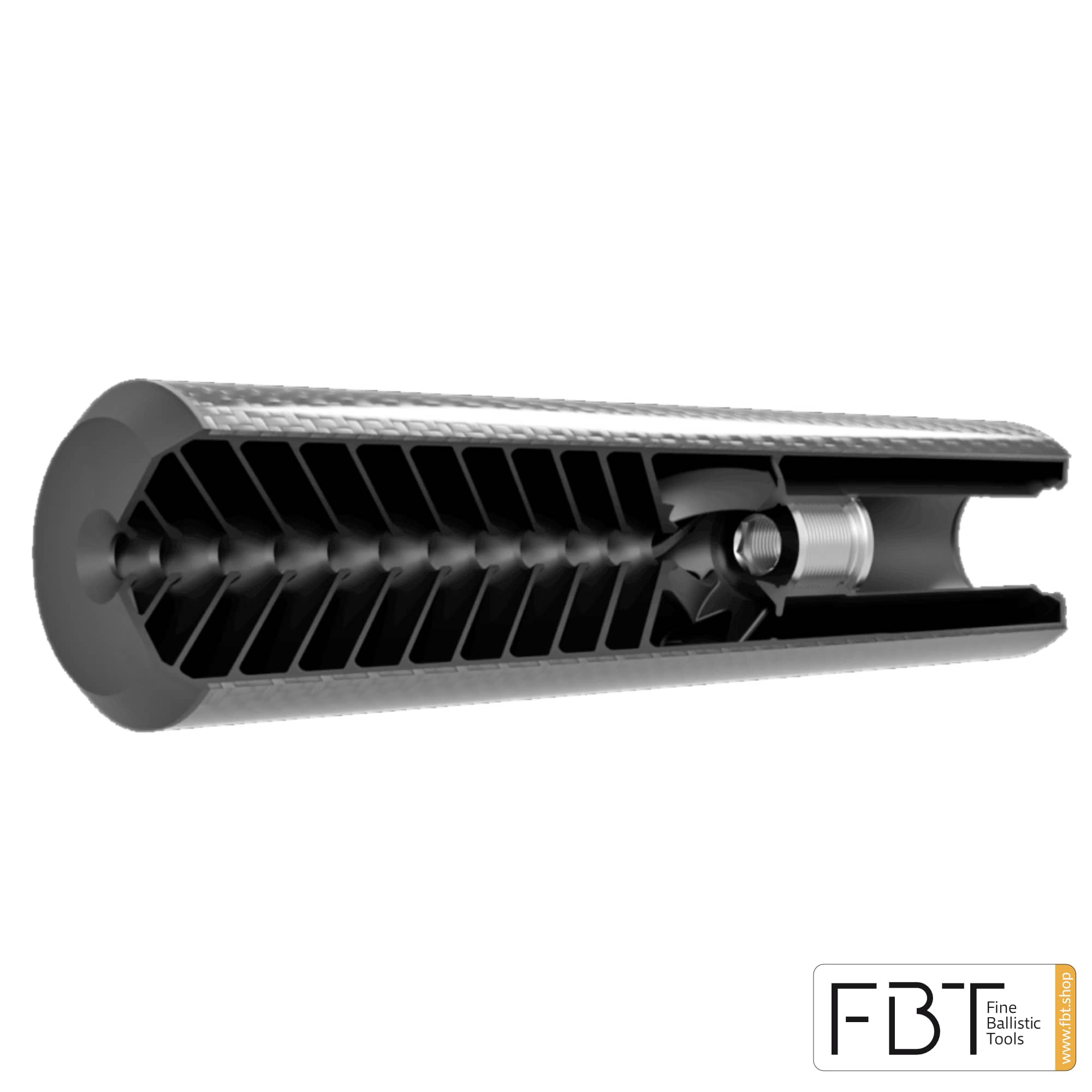
The name INCA stands for the integration of state-of-the-art materials. The development began with the aim of eliminating the disadvantages of classic steel dampers (high weight, susceptibility to corrosion) and aluminium dampers (low heat resistance, erosion). By using titanium in 3D printing, it was possible to create internal structures that are optimised in terms of fluid mechanics without being limited by the restrictions of CNC milling tools. This made it possible to create a closed material structure and a design that efficiently swirls and cools the gas volume before it leaves the orifice.
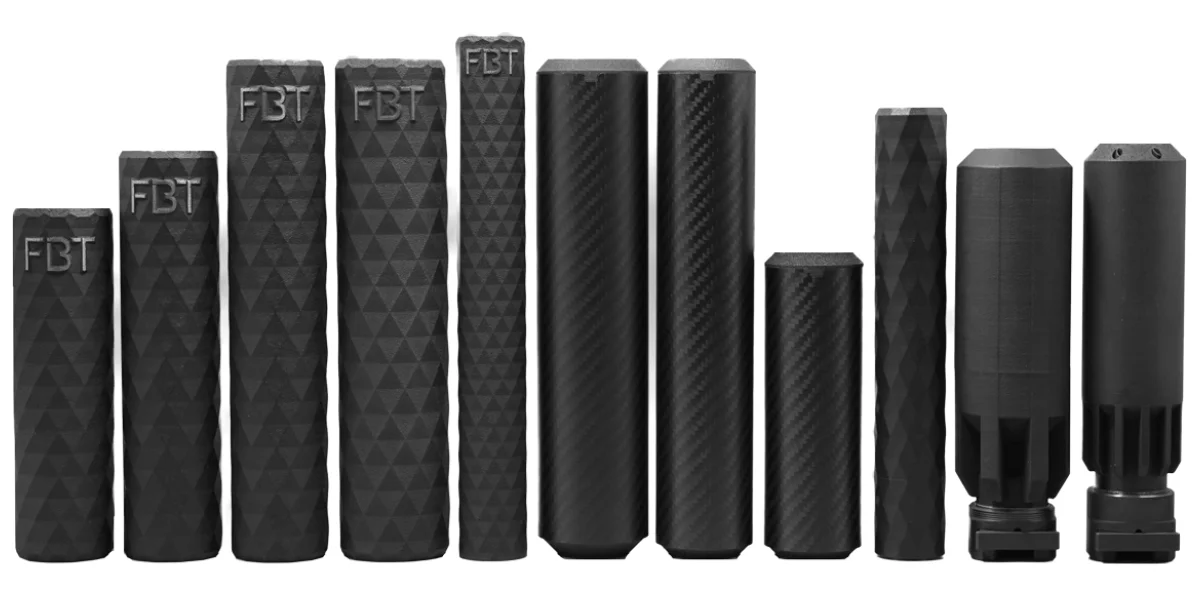
The product family is divided into four specialised application areas: the robust HOT-series for maximum load, the lightweight AIR-series with flicker protection, the integrated ONE-series for aesthetic symbiosis with the weapon and the tactical TAC-series for semi-automatic and fully automatic systems.
2. normative references and safety regulations (EU conformity)
The operation of silencers is subject to strict regulations in the European Union and in the national legislation of the member states. These instructions are based on the requirements of EU Directive 2003/10/EC on the protection of workers from the risks related to noise and the relevant firing laws.
2.1 Legal classification and acquisition requirements
In most European jurisdictions, silencers are treated in the same way as the firearms for which they are intended. This means that the silencer is regarded as an essential part of the weapon. Acquisition and possession is generally subject to authorisation. In Austria and many German federal states, the purchase is authorised for holders of valid hunting permits under certain conditions.
- Transfer: When travelling within the EU, the European Firearms Pass is required (compulsory registration).
- Assembly: The retrofitting of a muzzle thread to a barrel represents a significant modification (re-shooting is often necessary).
- Calibre restrictions: Use is strictly limited to the authorised calibre group.
2.2 Health protection and noise emissions
The EU Noise Directive defines exposure limits (max. 137 dB(C)). INCA silencers reduce the muzzle blast by 29 dB to 37 dB, depending on the model. However, the sonic boom of the projectile cannot be physically eliminated. Wearing additional hearing protection is therefore recommended.
2.3 Basic safety rules for handling
- State of charge: The firearm must be unloaded before any manipulation.
- Temperature: Acute risk of burns after firing! Titanium can reach several hundred degrees Celsius.
- Foreign body: Before firing, ensure that there are no foreign objects or liquids in the damper (risk of hydraulic explosions).
3. detailed product description of the INCA series
3.1 INCA HOT Series: The high-performance reference
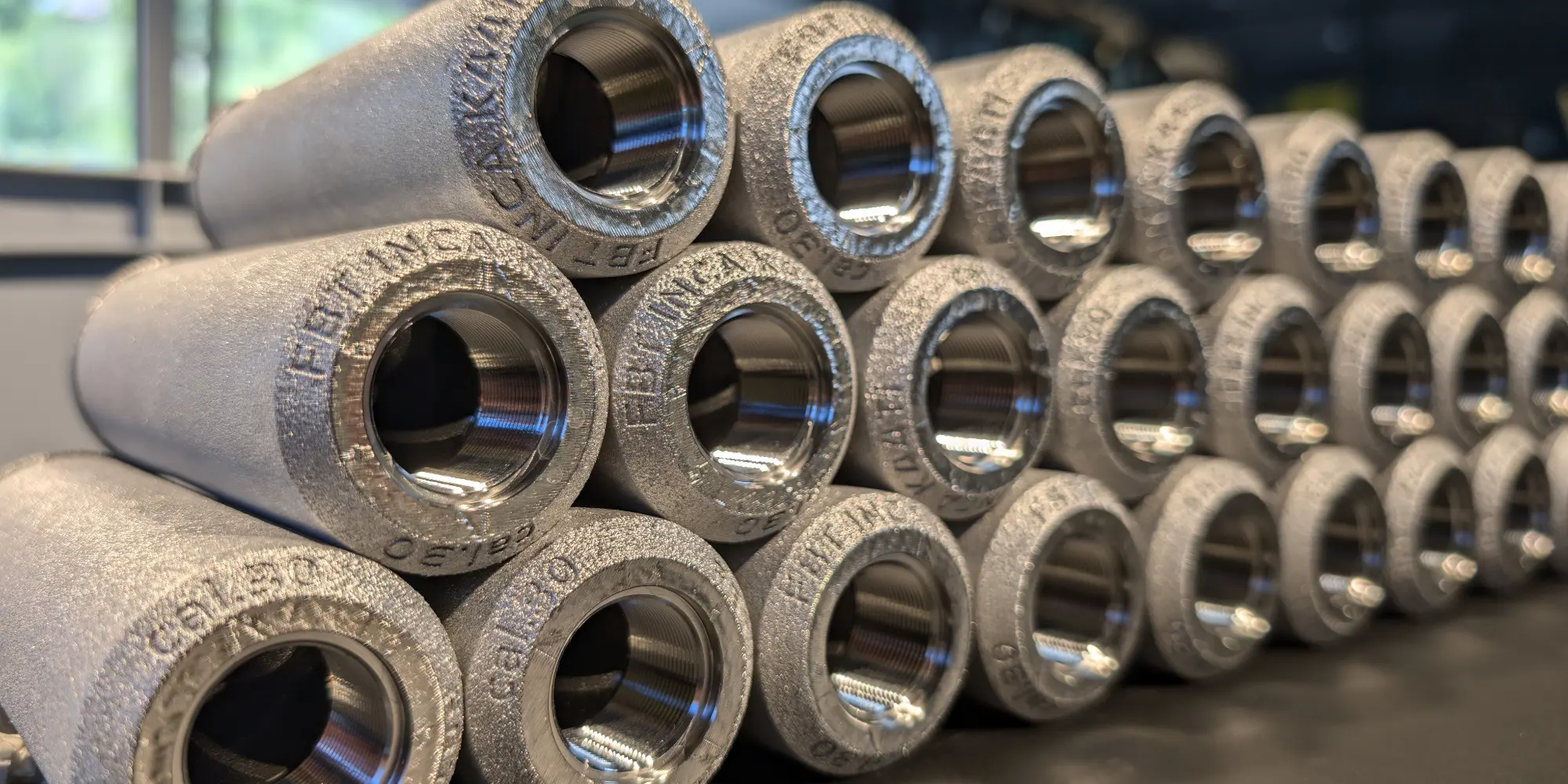
100% 3D-printed titanium for maximum load.
- Application profile: Driven hunts, shooting cinema, magnum hunting, long range.
- Design features: Full titanium body with non-slip surface structure for heat dissipation.
- Resilience: No calibre can overtax the HOT series (including .338 Lapua Mag).
3.2 INCA AIR Series: Ultralight and flicker-free
The answer to the demands of mountain hunting.
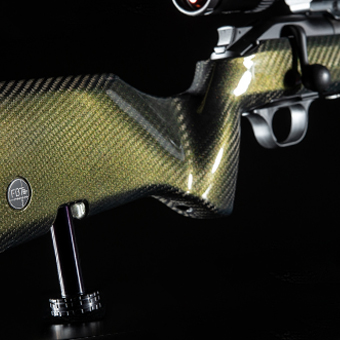
- Technology: Hybrid construction (titanium core, carbon outer tube, ceramic insulation).
- Anti-mirage effect: The carbon cover insulates the heat, hardly any warm air in front of the scope.
3.3 INCA ONE Series: The integral solution
Integral silencers that enclose the barrel.
- Concept: Utilises volume around the barrel for gas expansion without excessive elongation.
- Design: Extremely slim (31mm), use of open sights often possible.
3.4 INCA TAC Series: Tactical efficiency
For semi-automatic and fully automatic platforms.
- Low back pressure: Internal geometries minimise gas back pressure (“overgassing”).
- QD mounting: Quick-release fasteners on standardised flash hiders (e.g. NATO A2).
- Material: Titanium Grade 23 or INCONEL 718 for extreme heat resistance (continuous fire).
4. mounting and adapter systems
4.1 The M22x1 basic thread
The silencer has a standardised M22x1 fine thread in the rear section. It is not fixed to a barrel thread; only the adapter needs to be replaced when changing weapons.
4.2 Thread adapter installation
- Cleaning: Clean the internal thread (M22x1) and adapter thread.
- Insert: Screw in by hand, do not tilt (titanium seizes easily).
- Fixation: It is recommended to glue the adapter in the damper with Loctite 243 (blue).
- Dressing: Tightening torque approx. 25-30 Nm.
4.3 Mounting on the gun
- On-Barrel: Is screwed in front of the muzzle.
- Over-Barrel: Rests back over the barrel. The rear plastic guide ring must have at least 0.5 mm clearance to the barrel (serves as protection, not as support).
6. maintenance and care: the monolithic concept
INCA silencers are cannot be dismantled.
6.1 “Maintenance-free” - myth and reality
Titanium does not corrode, but cleaning is necessary to maintain the function and care of the thread.
6.2 Permitted cleaning methods
- Through hole: Every 200-500 shots with nylon or bronze brush.
- Thread maintenance: Clean regularly. Exclusively Use ceramic paste (anti-seize). Never use oil or grease (risk of coking).
- Exterior cleaning: Water/cleaner for titanium (HOT), damp cloth for carbon (AIR/ONE).
6.3 Prohibited measures
- No ultrasonic baths for HOT/AIR/ONE (risk of structural damage). Permitted for TAC.
- No chemical immersion baths (Liquid can remain in pores and cause corrosion later).
- Never attempt to open the damper.
6.4 Storage (Important!)
Unscrew the silencer after each use! Moisture and smoke form acids that destroy the barrel if the silencer remains mounted. Store upright for chimney effect.
8. fault diagnosis and problem solving (troubleshooting)
| Symptom | Possible cause | Remedy |
|---|---|---|
| Loss of precision (scattering circle opens) |
Damper loose | Check tight fit (tighten by hand). |
| Adapter loose | Check adapter. Re-glue if necessary. | |
| Baffle Strike | Check the outlet opening. If traces of contact: STOP. Check the barrel thread. | |
| Damper cannot be unscrewed | Thread seized | Allow to cool completely. Creep oil (carefully). |
| Coking | If oil is burnt in the thread: Lightly tap with a rubber mallet. Ceramic paste in future. | |
| Heat flicker | Extreme shot sequence | Allow to cool. Use FBT flicker tape. |